The Quietest Room Wins: How British Studios Turned Silence Into a Selling Point

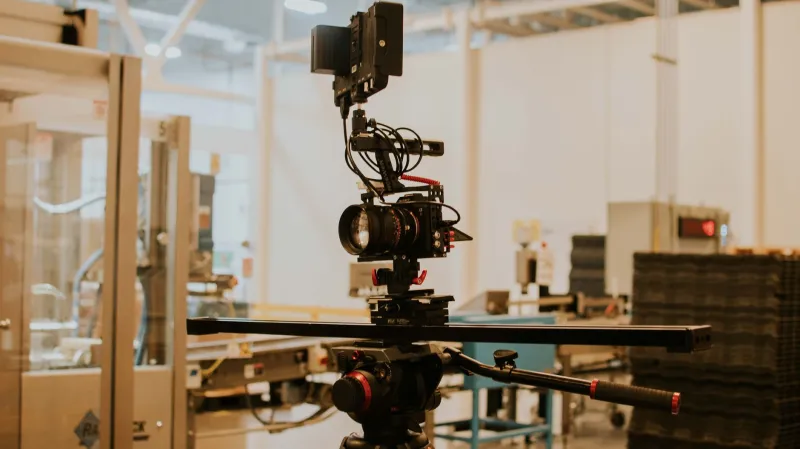
Photo: Chlod Alejandro, CC BY-SA 4.0, via Wikimedia Commons
Ten years ago, ask a facility manager what made a stage worth its rate card and you'd hear about ceiling height, three-phase power and how fast a truck could reach the loading door. Ask the same question in 2026 and the answer is increasingly measured in decibels — or, more precisely, in the absence of them.
Sound has become the quiet obsession of British production. Not the mix, not the score, but the raw conditions in which dialogue is captured. Studios up and down the country are retrofitting acoustic treatments that would once have been considered a luxury, and the people signing the cheques are not doing it out of perfectionism. They're doing it because a noisy room is now a measurable business risk.
The neighbours got louder
The squeeze is coming from outside the walls. Warehouses in Digbeth and Peckham that became fashionable production addresses have since acquired fashionable neighbours — rooftop bars, delivery depots running refrigeration units through the night, and residential blocks whose occupants are quick to file complaints. Environmental health officers work to limits, and a studio's licence can hinge on a handful of decibels escaping through a roller shutter.
"We had a ventilation plant that was perfectly legal and completely unusable," says one Bristol facility manager who oversees a converted industrial unit near the city's harbour. "You'd set up for a quiet two-hander and the room would sit at 38 dB before anyone opened their mouth. We ended up rebuilding the plant enclosure before we could book the stage out again."
Flight paths add another layer. Facilities under the approach to major airports have always scheduled around overhead traffic, but as production calendars tightened through the 2020s, the gaps became harder to find. Insulation specifications that were once aspirational are now written into tenancy agreements.
What 'quiet' actually measures
Acoustic consultants tend to talk in noise criteria rather than plain decibels, because a low hum at one frequency can be far more destructive to a take than a louder but broader sound. The target for a serious dialogue stage has crept downward: figures that would have raised eyebrows a decade ago are now the baseline for anything billing itself as a premium room.
Getting there is rarely one product. The standard recipe reads like a builder's shopping list:
- A floating floor on resilient isolators, decoupling the stage from the structure beneath
- A room-within-a-room shell, so the inner box never touches the outer walls
- Mass-loaded vinyl and多层 plasterboard where mass matters more than budget
- Duct silencers and lined plenums on every air path, because HVAC is the usual culprit
- Acoustic doors with proper seals, and a lobby arrangement so no one walks straight from a corridor into a take
The irony is that the loudest thing in most studios isn't the outside world at all. It's the building's own services. Fridges, transformers, lifts, plant rooms, that one flickering fluorescent ballast nobody has got round to replacing. Sound recordists have long joked that they can hear a kettle two rooms away; on a properly treated stage, they're no longer joking.
Designing for the microphone, not the ear
There's a distinction worth making between a dead room and a quiet one. A heavily damped box can be silent and still sound awful — flat, airless, with no life for an actor to play against. The better work in 2026 treats acoustics as a variable, not a fixed state.
"We're installing removable absorptive panels and movable diffusion so the same four walls can go from intimate drama to something with a bit of bounce," says a London-based studio designer whose firm has worked on three retrofits this year. "Clients want options. A commercial needs a different acoustic than a kitchen-sink feature, and increasingly they want to shoot both in the same building in the same month."
Recordists, meanwhile, are pushing back gently on the assumption that drier is always better. A good boom operator will tell you that a room with a little natural early reflection can flatter a performance. What they cannot work with is unpredictability — a hum that starts when the chiller kicks in, a buzz that only appears when the dimmer is at 40 per cent.
The cost maths nobody puts on the call sheet
Facility managers are refreshingly blunt about why the investment stacks up. Losing a line to noise means ADR, and ADR means booking an actor who has already moved on to another job, plus a studio, plus a engineer, plus the scheduling headache of matching a performance recorded weeks apart. Do that a few times on a production and the acoustic retrofit starts to look like the cheaper option.
There's also a reputational ledger. Crews talk. A stage that reliably delivers clean sound gets recommended, and recommendation is still how most of the UK industry books space. Some facilities now put background noise levels directly on their rate cards, the way a hotel might advertise its star rating — a small piece of marketing that carries real weight with a sound department deciding where to spend forty days.
The new premium
What's striking is how quickly silence has shifted from technical nicety to commercial identity. Studios that can't afford a full rebuild are buying themselves partial wins: sealing a single door, isolating one plant room, carving out a dedicated voice booth for pickups and podcast work. Small moves, but they change what the room can be hired for.
And the demand isn't only from film and TV. Music producers, audiobook studios, advertising houses and art projects with a sound component are all competing for the same treated space. In a market where a quiet room is scarce, it stops being a feature and starts being the product.
Which is, in the end, a slightly odd thing to sell. You can't photograph it. Visitors don't notice it. But put a microphone in the middle of it, close the door, and everyone in the building knows exactly what they've paid for.