The Room Before the Room: Why Green Rooms Do the Heavy Lifting on a British Shoot
Photo: Tackhaiwcm, CC BY-SA 4.0, via Wikimedia Commons
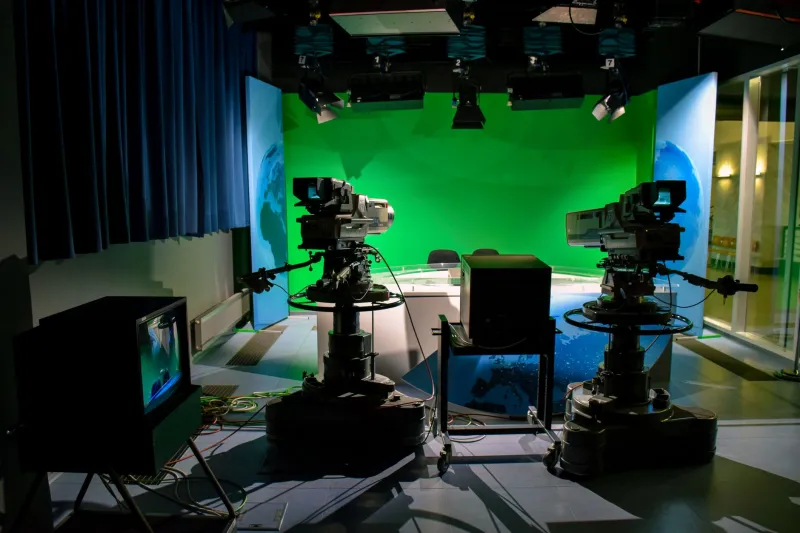
The green room is the room before the room. It is where the client takes a breath, where the talent waits for a cue, where the crew grabs five minutes and a biscuit before the next setup. It is also the part of a studio that is easiest to treat as an afterthought: a corridor with a kettle, a sofa that came from a charity shop, a bin that nobody empties.
We think that is a mistake. In a British studio, the green room is not a soft extra. It is a practical production tool. It is the place where nerves are managed, where the schedule is protected and where the day is quietly held together.
The five-minute reset
A shoot day is full of small pressures. A client is spending money and wants the work to be good. A director is trying to protect an idea. A crew is watching the clock. A performer is trying to arrive in the right headspace after a train delay and a paper cup of coffee. None of those pressures disappear because the lights are nice.
The green room gives everyone somewhere to put them down. Not a corridor. Not the back of a van. A room with a door, a seat, a surface, a plug and a bit of quiet. The best ones are boring in the right way: warm, clean, well lit, easy to find and stocked with the things people actually need. Water. Tea. Coffee. Something to eat that is not only sugar. Bin bags. Tissues. Phone chargers. A clock.
That sounds trivial until you have watched a production lose twenty minutes because a client could not find a quiet place to take a call, or a performer had nowhere to sit except a flight case. Hospitality is not about luxury. It is about removing friction.
Hospitality is a production tool
Ask studio managers and producers what keeps a day moving and you will hear the same unglamorous answers. Breaks that happen properly. Food that arrives on time. A room that is warm enough to sit in without a coat. A toilet that is clean. A clear line between the set and the place where people can be off-duty.
One studio manager told us that the green room is where you find out whether a shoot is being run well. If the room is a dumping ground, the day is probably being run from one crisis to the next. If it is cared for, people trust the production to look after them. That trust shows up in small ways: crew stay calmer, clients ask fewer anxious questions, performers come back from a break ready to work.
This is not about being nice for its own sake. It is about reducing mistakes. A tired crew misses a cable. A hungry client makes a rushed decision. A nervous performer is given less time to settle. A production that treats hospitality as an extra is a production that is borrowing time from its own schedule.
What bad green rooms get wrong
The most common mistake is proximity. A green room too close to the set is not a green room; it is another part of the noise. People cannot take a call, rehearse a line or close their eyes for ten minutes if they can hear the monitor and smell the smoke machine.
The second mistake is privacy. Clients may need to talk about money. Talent may need to change. Crew may need to complain about something that should not be broadcast across the unit. A green room needs a door that closes and a culture that respects it. That does not mean a vip suite. It means a clear signal that this is not the through-route to the toilet.
The third mistake is clutter. Flight cases, recycling, spare stands and half-empty coffee cups all end up in the green room because it is the nearest empty space. Before long, nobody wants to sit there. The room becomes a storage cupboard with a sofa in it. The fix is simple and boring: keep it clear, keep it clean, keep it stocked.
Designing the space between takes
Good green rooms are designed around a few honest questions. Who will use this room? Will they need to eat, rest, change, make a call or have a quiet word? Where is the nearest power socket? Is there natural light, and can it be controlled? Is the room warm, ventilated and accessible? Can someone with a mobility aid get to it without navigating a maze of cable ramps?
Small studios do not always have the luxury of separate rooms for client, crew and talent. In those cases, zoning helps. A table for food and drink. A sofa for resting. A quiet corner with a screen or a curtain. A noticeboard with the call sheet, the wifi password and a contact number. A locker or a labelled box for personal belongings. A bin that is emptied before it becomes an archaeological site.
We also think about sensory load. A green room should be a place where someone can reduce the noise, not add to it. Soft furnishings help. So does lighting that is not a single overhead bulb. A bowl of earplugs costs almost nothing. A sign that says quiet please is not a joke. It is a small piece of production design for the people in the room.
The budget conversation
Hospitality has a budget, and it is usually smaller than people fear. A decent kettle, a proper sofa, a few good chairs, a lamp, a mirror, a bin, a mop and a weekly shop will do more for a shoot than a fancy sign in reception. The return is not measurable in a single line item, but it is measurable in repeat bookings, word of mouth and a crew that does not dread the location.
At Kube Studios we would rather have a green room that feels looked after than a reception that looks impressive. The room before the room is where the day is quietly decided. Kettle, couch, confidence. It is not glamorous. It is the job.