Tape, Scuff, Repeat: What a Studio Floor Remembers

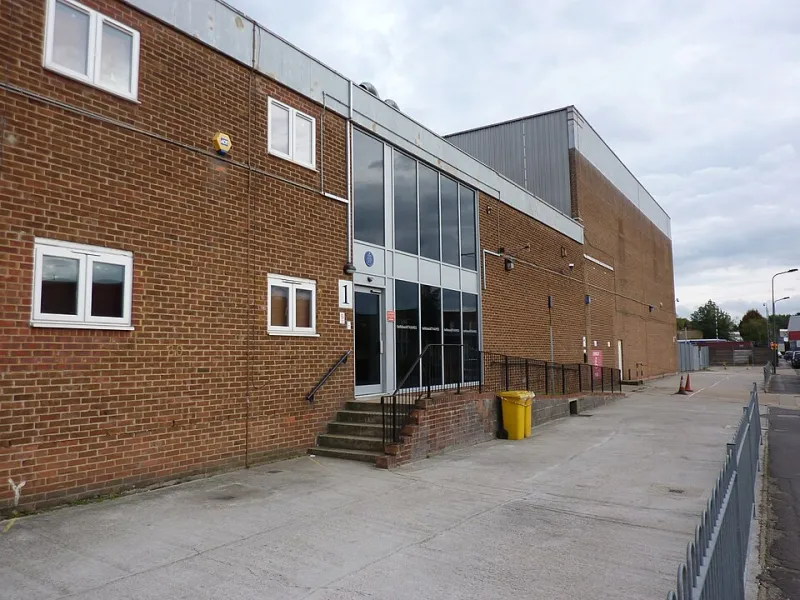
Photo: Siemens AG, CC BY-SA 3.0 de, via Wikimedia Commons
Walk into a British studio once the call sheet has been signed off and the crew has gone home, and the room looks empty. It isn’t. The floor is still talking. There is a rectangle of black gaffer tape near the back wall, a pale arc where someone pivoted the same way for three days, a patch of floor paint that doesn’t quite match the rest, and a small cluster of spike marks by the door. None of it was designed as an archive. All of it is one.
The accidental archive underfoot
Studios are usually described by their height, their power supply, their cyc or their blackout. The floor gets mentioned only when it squeaks. But in the UK, where production often happens in railway arches, former churches, industrial units and rooms that were built for something else entirely, the floor is one of the most honest records of how the space is actually used. It shows where sets stood, where cameras tracked, where dancers turned, where cables ran and where a director wore a groove while waiting for a lighting reset.
A call sheet tells you what was planned. The floor tells you what happened. That is a useful distinction for anyone commissioning work, hiring a studio or trying to understand why a room feels the way it does. Marks accumulate in layers: a strip of white tape from a commercial, a smear of primer from a set build, a ring of worn varnish where a stool was dragged during a rehearsal. The floor is a document written by feet, wheels and flight cases.
What a strip of tape actually records
Gaffer tape is the obvious culprit, but it is not the only one. Spike tape marks positions for performers and camera operators. Camera tape can indicate a track or a focus mark. Masking tape often outlines a set wall or a prop zone. Then there are the marks nobody intended: scuffs from steel-toe boots, shallow gouges from a tripod foot, a faint rectangle where a road case sat for a fortnight. In a studio with a painted floor, every repair adds another patch to the palimpsest.
The detail is often practical rather than romantic. A curved scuff near a mark tells you someone turned quickly. A line of tape that survives three productions tells you the room has a natural blocking point. A cluster of marks by the loading door tells you where the floor takes the most punishment. In British studios, where space is tight and turnarounds are often short, these traces are a kind of operational memory. They show how the room absorbs a crew.
Protecting, repairing and the temptation to preserve
Studio floors are consumables. They get sanded, filled, repainted and covered. Hardboard goes down for dance rehearsals; vinyl protects a wooden floor from a wet-weather shoot; MDF takes the screws that would otherwise chew up the original boards. A working studio cannot afford to treat every mark as precious. If it did, it would stop being a studio and become a museum of old tape.
But the decision is rarely all-or-nothing. Many studios keep a balance: repair the worst damage, protect the surface, and leave the odd trace that tells a story. One long-running British studio is said to have sealed a section of floor under a clear coat because it carried the faded outline of a set that had become part of the room’s identity. Others repaint every few months and accept that the record resets. Neither approach is wrong. The question is whether the floor is being treated as a tool, a heritage object, or both.
That tension is familiar to anyone who works behind the scenes. A studio is a place of making, and making leaves evidence. The trick is to manage the evidence without letting it manage the room. Tape residue has to go. Loose boards have to be fixed. But a floor that is too pristine can feel like a showroom rather than a workshop. Creative collaborators tend to relax in rooms where the history is visible but not chaotic.
The choreography written in scuffs
Look closely at a studio floor after a dance call and you can almost reconstruct the routine. There are pivot marks, heel scuffs, the occasional crescent where someone slid. After a camera-heavy shoot, the pattern changes: straight lines, small cross marks, the ghost of a dolly track. After a set build, it becomes a map of saw horses, paint tins and screw holes. The floor records not just movement but hierarchy: where the crew stood, where the client sat, where the director paced.
British weather adds its own layer. Wet shoes bring grit in from the loading bay. A door that sticks leaves a scrape. A heater placed too close to a painted surface leaves a faint bloom. These are not glamorous details, but they are the sort of details that make a studio feel lived-in and legible. They tell you how the room copes with a November shoot, a tight schedule and a crew that has to keep moving.
Why the floor is worth reading
For clients, a studio floor can be a useful honesty test. Does the room look used in a way that matches its marketing? Are the marks concentrated in sensible places? Has the floor been protected where it matters? For creative collaborators, it is a reminder that a studio is not a blank canvas. It is a working environment with habits, scars and compromises. Reading those signs helps you plan a shoot that works with the room rather than against it.
At Kube Studios, the floor is part of the conversation about how work gets made. It is where the tripod lands, where the set sits, where the crew gathers and where the last bit of tape gets peeled up at the end of the night. The marks may not make the final cut, but they are part of the production all the same. A studio floor is never just a surface. It is a record of everyone who has stood on it and decided where to put the next mark.