The Window That Never Rains: Faking Daylight on a British Shoot
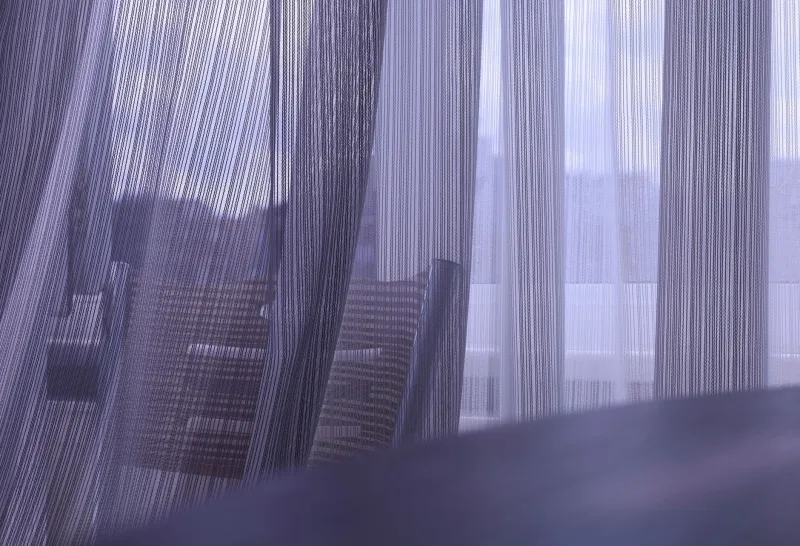
November light in Britain has a reputation for being polite to the point of absent. It arrives late, leaves early and spends the bit in between apologising through a layer of cloud. That is lovely for a walk. It is less lovely when you have a call sheet, a costume that reads green under the wrong source, and a scene that is supposed to take place at 10am on a bright spring morning.
This is where the fake studio window earns its keep. Not the sort of fake window that is obviously a lightbox in a corporate meeting room, but the proper bit of scenic and lighting craft: a frame, a reveal, a soft source outside it and a gaffer who knows when to stop. On a grey November shoot, the made window is often not just a compromise. It is the better option.
Why the real window is a rival, not a resource
A real window looks free until you try to shoot through it. Then it becomes a scheduling problem with a view. The sun moves. The clouds gather. A bin lorry reverses somewhere just out of frame. The light changes between the wide and the close-up, and suddenly the editor is being asked to match two performances that appear to have been shot in different countries.
A studio window, by contrast, does what it is told. It can be the same at 9am and 4pm. It can be warm or cool, soft or crisp, overcast or improbably sunny. It can be dimmed for a mood shift or bumped up when an actor moves closer to the frame. And it does not care that the forecast has changed its mind for the third time since breakfast.
That reliability matters most on the sort of low-budget British shoot where every hour has a price and every weather delay has a knock-on effect. You are not paying for fake daylight because you are fussy. You are paying for continuity, and continuity is cheaper than a second day.
What goes into the illusion
The basic build is simple enough to describe and fiddly enough to get right. A scenic frame is constructed with a believable reveal, a sill, some depth and usually a bit of glazing or a practical curtain. Behind or beside it, a gaffer places a soft source: LED panels, a bounced light, sometimes a dedicated daylight unit with diffusion and a scrim. The trick is not making it bright. The trick is making it feel like light that has travelled.
That means colour temperature has to sit with the rest of the room. It means the spill has to fall across the floor and the actor's face at an angle that makes sense. It means the window frame should cast a shadow, but not a pantomime shadow. It means reflections in glass need managing, especially when the camera moves. A fake window can be ruined by one hard highlight on a picture frame opposite.
Set designers and studio managers tend to talk about the outside as a negative space. The audience should not really study it. They should read it as a place where weather exists, where a street might be, where the day is happening without them. A few branches, a bit of sky, a suggestion of brick across the way: that is often enough. The moment it becomes a mural, the room starts to feel like a stage set rather than a room.
The budget question
There is a temptation to assume fake daylight is the expensive option. Sometimes it is. A well-built scenic window, a decent LED package and a gaffer's time all cost money. But compare that with a location shoot where the light is free and the waiting is not. Weather cover, overtime, travel, resetting between cloud cover: the costs add up quietly and then all at once.
For smaller British studios, the fake window has also become a selling point. If you can offer a controllable daylight setup as part of the room, you are solving a problem before the client arrives. Producers do not have to gamble on a south-facing window and a prayer. They can book the look, not the latitude.
The psychology of a room with an outside
There is a reason fake windows work on camera and on the people standing in front of them. A room with no window can feel sealed and airless, even when it is perfectly well ventilated. A convincing window gives the eye somewhere to go. It gives the scene a sense of time and place. It tells the audience whether it is morning, afternoon or the sort of November dusk that starts at half three.
Actors respond to that too. They turn towards it. They play the light. Crew morale lifts a little when the set has a suggestion of the outdoors, even if the outdoors is a diffusion frame and a clever bit of scenic painting. It is not about tricking anyone for long. It is about giving everyone enough to believe in.
The craft is in restraint
The best fake windows are not the most elaborate ones. They are the ones where nobody notices the join. The source is soft enough to flatter, the frame is deep enough to read, the spill is controlled enough to keep the room from looking like an aquarium. The gaffer watches the monitor, not just the meter. The set designer leaves a little imperfection in the view. The studio manager keeps the gels, the flags and the spare dimmer within reach.
On a grey November day, that is a small piece of quiet magic. The rain can do what it likes. Inside, the window is holding its light, and the shoot is moving.